
"coffee growing regions Africa"
1000 article(s) found

Coffee utensils from which country in the coffee bean producing area
The most sensible and practical way to understand coffee-producing countries is to classify them into the world's three major coffee growing regions: Africa, Indonesia and Central and South America. Generally speaking, coffee grown in the vicinity has similar characteristics. If a particular bean is out of stock, the manufacturer and buyer of the comprehensive product will usually look for a nearby country. People who make comprehensive products will say: I think

Coffee beans in coffee-producing areas distinguish between the countries that produce coffee
The most sensible and practical way to understand coffee-producing countries is to classify them into the world's three major coffee growing regions: Africa, Indonesia and Central and South America. Generally speaking, coffee grown in the vicinity has similar characteristics. If a particular bean is out of stock, the manufacturer and buyer of the comprehensive product will usually look for a nearby country. People who make comprehensive products will say: I think

Uganda Coffee Bean Characteristics Flavor Description Taste Treatment Variety Region Grinding Scale Introduction
After World War I, Uganda's long-standing discontent with colonial rule finally erupted. In 1918 there was a nationwide general strike and rural unrest. In 1919 Buganda again launched a democratic movement under the Bataka Party and Uganda African Farmers Union. In 1921, Uganda's first

Introduction to the Regional treatment method of Santa Rita Coffee Bean in Colombia
Columbia Santa Rita Coffee Bean Flavor characteristics Manor area treatment method for growing coffee also requires daylight and proper shade, which is most suitable for planting on fertile soil or volcanic ash soil. Therefore, the origin of coffee is widely distributed in South America, Central America, the West Indies, Asia, Africa, Arabia, the South Pacific and Oceania. Such as Ethiopia and Tanzania in Africa

Introduction of coffee producing countries in Africa-introduction of coffee producing areas in Ethiopia, Kenya and Yemen
Africa is the third largest coffee producer in the world, after South America and Asia. Ethiopia, Kenya and Yemen are the main coffee products in Africa. Ethiopia is the largest Arabica producer in Africa, followed by Kenya. Yemeni coffee production, which monopolized the global coffee market before the 18th century, is declining year by year and is about to disappear from the coffee map. First of all, let's talk about

Why coffee beans grow higher in the region, the better the quality, the better the growing environment
The higher the quality of coffee beans grows in the region, the better the quality. Roberta coffee trees are native to Congo, Africa, and account for about 20%, 30% of the world's output. Roberta coffee tree is suitable for planting in the lowlands below 500 meters above sea level. It has strong adaptability to the environment, can resist bad climate, resist diseases and insect pests, and is not needed in soil preparation, weeding and pruning.

Boutique coffee Kenya coffee growing Nyeri Central Mountain Region
Rare good coffee-known for its rich aroma and balanced acidity. Coffee professionals consider Kenyan coffee to be one of their favorite products because Kenyan coffee contains every feeling we want from a good cup of coffee. It has a wonderful, satisfying aroma, balanced acidity, well-proportioned particles and excellent fruity notes.《

Coffee flavor characteristics of different regions? What are the characteristics of different treatments?
Africa If the coffee beans are of African origin, you will feel a distinct acid and fruity character. Especially Ethiopia, coffee from this region can be felt in the tea-like body, blueberry flavor, as well as rich fruit and good acid. If it's coffee beans from Kenya, it'll have a very distinctive grapefruit flavor and cleanliness.

An introduction to the taste of coffee flavor description in Ethiopia's Xida Moshaschiso region.
President Mulatut Shawmei. He studied Chinese at Beijing language and Culture University (now Beijing language and Culture University) from 1976 to 1977; studied at the Department of philosophy of Peking University from 1977 to 1982; studied for a master's degree in the Department of National Politics of Peking University from 1984 to 1988; and studied for a doctorate in the Department of National Politics of Peking University from 1990 to 1991. He has served as a member of Ethiopia in Japan, Australia, China and other countries.

Introduction to the grinding scale of regional treatment method for Ugandan coffee flavor and taste
Uganda Coffee Flavor Manor Regional treatment Grinding scale the country is located between the east and west branches of the East African Rift Valley, tilting gently from west to middle and low and flat in the south. Margarita Peak is 5109 meters above sea level, the highest in the country. There are many rivers and lakes and a large water area, so Uganda is known as a plateau water village and a pearl in East Africa. Lake Victoria is the second largest freshwater lake in the world and the largest in Africa.
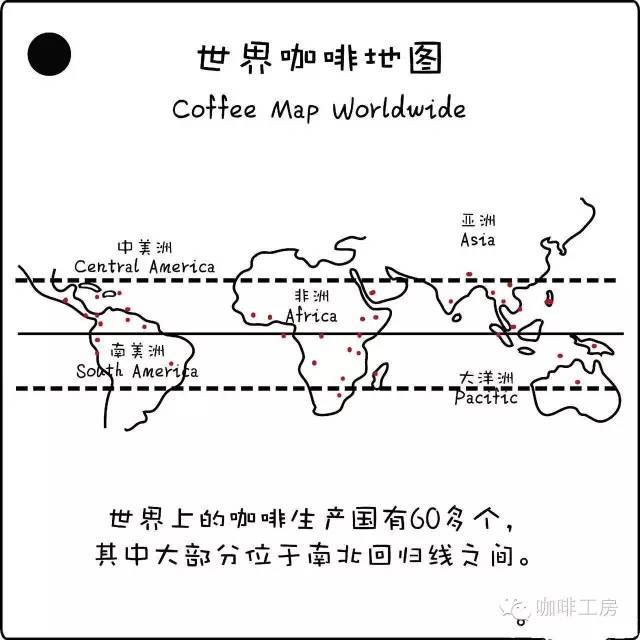
Evaluate the regional characteristics of the two major coffee producing areas: [Africa] and [America].
In the preface, there are some vague definitions of fine coffee, such as variety, treatment and quality identification, but there are also some very clear definitions: only in the most favorable microclimate and soil and water can we grow high-quality coffee with unique flavor. Coffee belt coffee trees are only suitable for growing in the tropics or subtropics, so the zone between latitude 25 degrees south and north is the most suitable for growing coffee. And this...

Coffee flavor introduces how to use a coffee machine to make strong coffee.
The most sensible and practical way to understand coffee-producing countries is to classify them into the world's three major coffee growing regions: Africa, Indonesia and Central and South America. Generally speaking, coffee grown in the vicinity has similar characteristics. If a particular bean is out of stock, the manufacturer and buyer of the comprehensive product will usually look for a nearby country. People who make comprehensive products will say: I think

Introduction to the Regional characteristics and grading system of Coffee producing areas in Yemen
For more information on coffee beans, please follow the coffee workshop (official Wechat account cafe_style). When it comes to Yemeni coffee, people immediately think of the magical sun-dried beans that taste thick and full, and the fantastic wild aroma of fermented tea is stacked on stacks, full of mystery and elusiveness and infinite longing like the country of Yemen. Yemen is located in Ethiopia across the Red Sea and East Africa in Asia.

What kind of coffee do you have for coffee beans? coffee prices today.
Coffee grows mainly in the coffee belt between the Tropic of Cancer and the Tropic of Cancer. According to the growing areas of coffee beans, there are three regions, including Asia / Pacific, Latin America and Africa / Arab regions. They are mainly characterized by their taste, Asia / Taiping region, will have a relatively strong herbal flavor or earthy aroma, Latin American coffee bean taste comparison in all aspects

The unique floral flavor of boutique coffee beans from Geisha, an Ethiopian region in Africa
The species of Geisha was discovered in the Rose Summer Forest of Ethiopia in 1931 and sent to the Coffee Institute in Kenya; it was introduced to Uganda and Tanzania in 1936, in Costa Rica in 1953, and Panama was introduced in the 1970s by Francesca of Dongba Seven Farm Garden. Mr. Serraxin got the seeds from CATIE in Costa Rica and started growing Rosa Coffee because

Flavor description of Arabica coffee beans in Latin America introduction to the regional treatment of manor production
Flavor description of Arabica coffee beans in Latin America the planting of coffee trees is only the first step in coffee production. When the coffee fruits are ripe, they can be harvested through picking equipment. Two seeds (Arabica coffee beans) are then extracted from each berry. The last step is to roast coffee beans for consumption. This removes moisture and changes coffee.
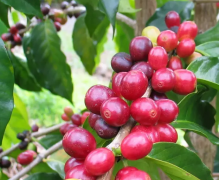
Hard coffee planting tips for a cup of coffee
Geographically, there are three global coffee growing areas: East Africa and the Arabian Peninsula, Southeast Asia and the Pacific Rim, and Latin America. Coffee grown in different regions has different flavors. The special soil, climatic conditions and planting methods of a country make the coffee produced in that country have a special flavor. French winemakers call this phenomenon regional style. In

Uganda Coffee Bean Taste Uganda Coffee Region
Ugandan coffee beans have a unique flavor and fragrance, which is very suitable for making Italian and other flavors of coffee. More importantly, Ugandan coffee beans are strictly screened according to international market standards to ensure their high quality and pollution-free characteristics. Africa is home to Arabica and Robusta, two major coffee varieties, while East Africa enjoys a plateau of water and the pearl of East Africa.

Uganda description of Ugandan Coffee Flavor introduction to the regional treatment of taste production in manors
Uganda Uganda coffee flavor description manor taste area treatment method Uganda is a tropical African country, its fertile soil, suitable altitude and climatic conditions are suitable for the growth of high-quality coffee. As early as more than a decade ago, the leaders of China and Ukraine had the intention to enhance the trade cooperation and traditional friendship between the two countries through coffee trade. In the concern of the leaders of the two countries and Beijing